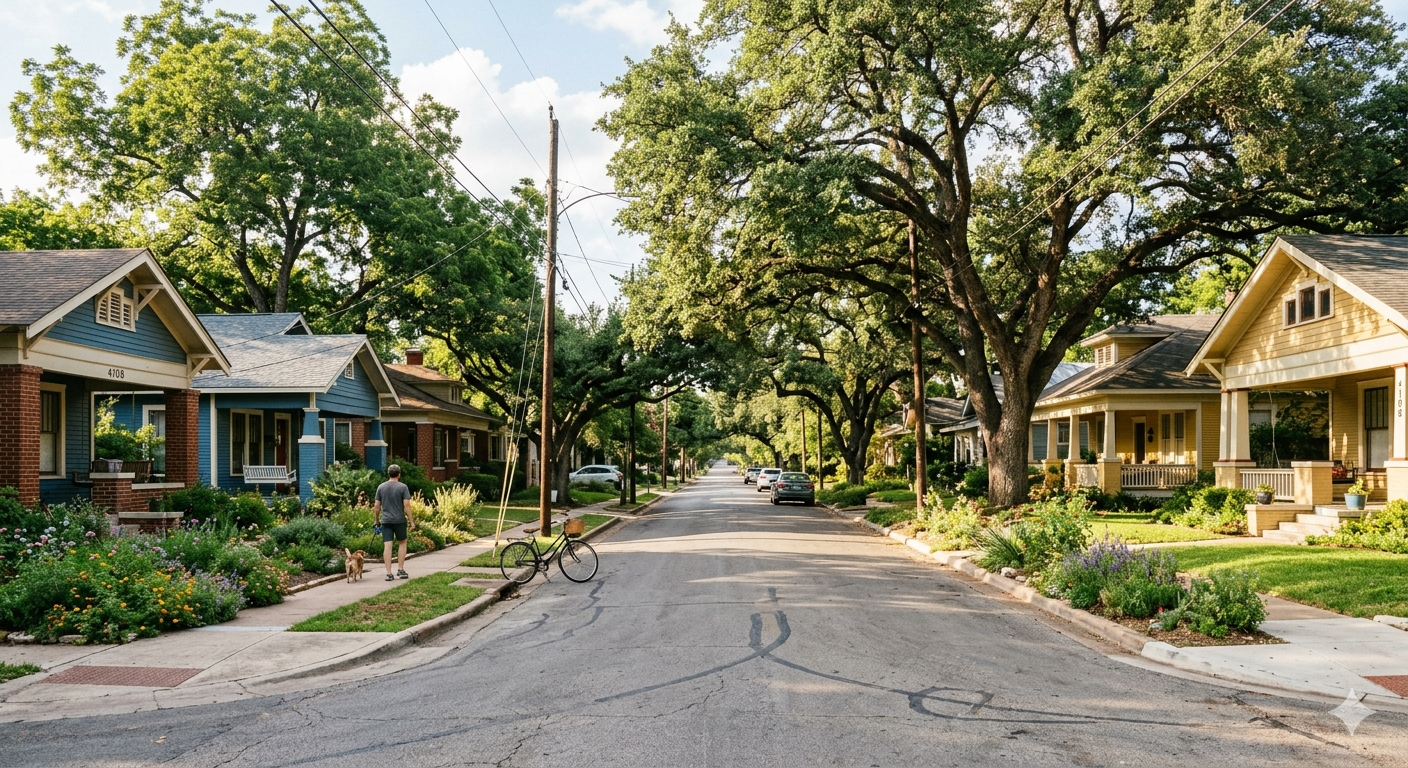
Austin's most walkable neighborhoods often mean smaller lots and older homes. Trading that walkability for more land and newer construction involves real tradeoffs: commute time, lot size, home age, renovation needs, and daily lifestyle. Here's how to weigh these factors across South, East, and Central Austin.
What should buyers compare when trading walkability for more space in Austin?
The choice between a walkable established neighborhood and a quieter area with more land and newer construction isn't just about preference. It's about your actual daily life, your commute, your budget, and what you're willing to trade away.
Austin's most walkable neighborhoods, like parts of South Austin (78704 and 78745), East Austin, and Central Austin (Allandale, Brentwood, Rosedale), typically feature smaller lots, older homes built closer together, and mature tree-lined streets where you can reach shops, parks, and restaurants on foot or by bike. That walkability comes with a real cost: tighter footprints, older structures that may need renovation, and less outdoor space per dollar spent.
If you're considering trading that walkability for more space, here's what actually matters to compare.
Lot Size and What You Get to Use
In walkable South Austin neighborhoods like 78704, a typical lot might be a quarter acre or smaller, with the home sitting close to the street. In less dense areas with newer construction or established neighborhoods a bit further out, you might find half-acre or larger lots with room for a real yard, garden space, or future expansion.
But lot size on paper isn't the same as usable space. A sloped lot in Northwest Austin or a lot with drainage constraints might look bigger but offer less practical outdoor area. Before you choose based on acreage alone, walk the property, consider the topography, and think about how you'd actually use the space. A smaller lot in a neighborhood you love might feel more spacious than a bigger lot that doesn't fit your lifestyle.
Home Age and Renovation Reality
Walkable Austin neighborhoods are built on older, established housing stock. Homes in 78704, 78745, and established Central Austin often date back 40, 60, or even 80 years. These homes have charm and character, but they also have roofs that may need replacing, HVAC systems nearing end of life, foundations to inspect, and sewer lines that could fail.
Newer construction, especially around Liberty Hill, Georgetown, Kyle, or Buda, comes with builder warranties, modern systems, and minimal immediate repair needs. The tradeoff is obvious: older homes cost less upfront but demand capital for maintenance and upgrades. Newer homes preserve your cash flow but carry a higher purchase price and may lack the established tree canopy and neighborhood roots of Central Austin.
If you're seriously considering an older established home for its walkability, budget for inspection carefully. Professional inspections matter. Specific questions about electrical panels, plumbing, roof age, and foundation condition can reveal whether you're buying a well-maintained original or a money pit waiting to happen.
Commute Versus Daily Convenience
Walkability is really about what you can do without a car. In 78704, you walk to Zilker Park, coffee shops on South Congress, and neighborhood groceries. In parts of East Austin, you're within reach of restaurants, galleries, and cultural venues on foot. That convenience saves time, reduces car dependency, and shapes how you spend your daily life.
Moving further out for more space usually means a longer commute to your workplace and reliance on your car for everyday errands. That matters more than you might think. An extra 15 minutes each way, five days a week, adds up to 60 hours per year in the car. Gas, wear and tear, and driving stress are real costs, not just conveniences lost.
Before you trade walkability for space, test your actual commute from the new neighborhood. Don't rely on a travel-time estimate alone. Drive the route during peak hours multiple times. Understand the routes you'll take, the traffic patterns, and what your daily life will actually look like. That real information matters more than a guess.
Budget and Total Cost of Ownership
Walkable established neighborhoods in South and Central Austin often cost less per square foot than newer construction further out, but the total monthly cost of ownership involves more than mortgage and taxes. It includes:
- Maintenance and repairs on older systems and structures
- Property taxes, which vary by neighborhood and local tax rates
- HOA dues, if the neighborhood has them
- Commute costs, fuel, vehicle maintenance, and wear and tear if you're trading walkability for distance
- Insurance, which may vary based on flood risk or other neighborhood factors
A home that looks cheaper on the purchase contract may cost significantly more after you account for the roof replacement you'll need in two years, the sewer-line work the inspection flagged, or the daily commute to a job you're not keeping. Build a full estimate of your actual monthly carrying costs, maintenance reserve, and commute expenses before you decide.
Neighborhood Character and Long-Term Fit
Walkable neighborhoods have established community roots. Neighbors know each other. Parks, schools, and local businesses serve the same people year after year. That creates a sense of place and belonging that you can't manufacture with square footage.
Newer construction areas or quieter neighborhoods further out may feel quieter and more spacious, but they're often still building that character. They may not have the same walkability, the same community institutions, or the same long-term stability. That's not bad, it's just different. Make sure the tradeoff aligns with what you actually want in your neighborhood and your life.
Making the Comparison Concrete
If you're seriously weighing these options, spend real time in both kinds of neighborhoods. Walk around a walkable area like parts of 78704 or East Austin during the times you'd be home. Notice what's within reach, how it feels, and whether that appeals to you. Then visit a newer or less dense neighborhood and do the same. Drive the commute from both. Talk to neighbors. Understand what you'd be gaining and what you'd be losing in concrete terms.
Work with a real estate advisor who knows both kinds of neighborhoods deeply. They can help you identify comparable homes at your budget, walk you through the actual cost differences, and connect you with inspectors or other professionals who can evaluate older homes honestly. Don't guess at renovation costs or commute stress. Get professional input.
There's no objectively right answer. Some buyers thrive in walkable, established neighborhoods and never want a bigger lot. Others need the space and the quiet, even if it means a longer commute and newer systems to learn. The key is making that choice deliberately, with real information about what you're trading and what you're gaining.

Graham Brothers
The Graham Brothers — Austin Real Estate