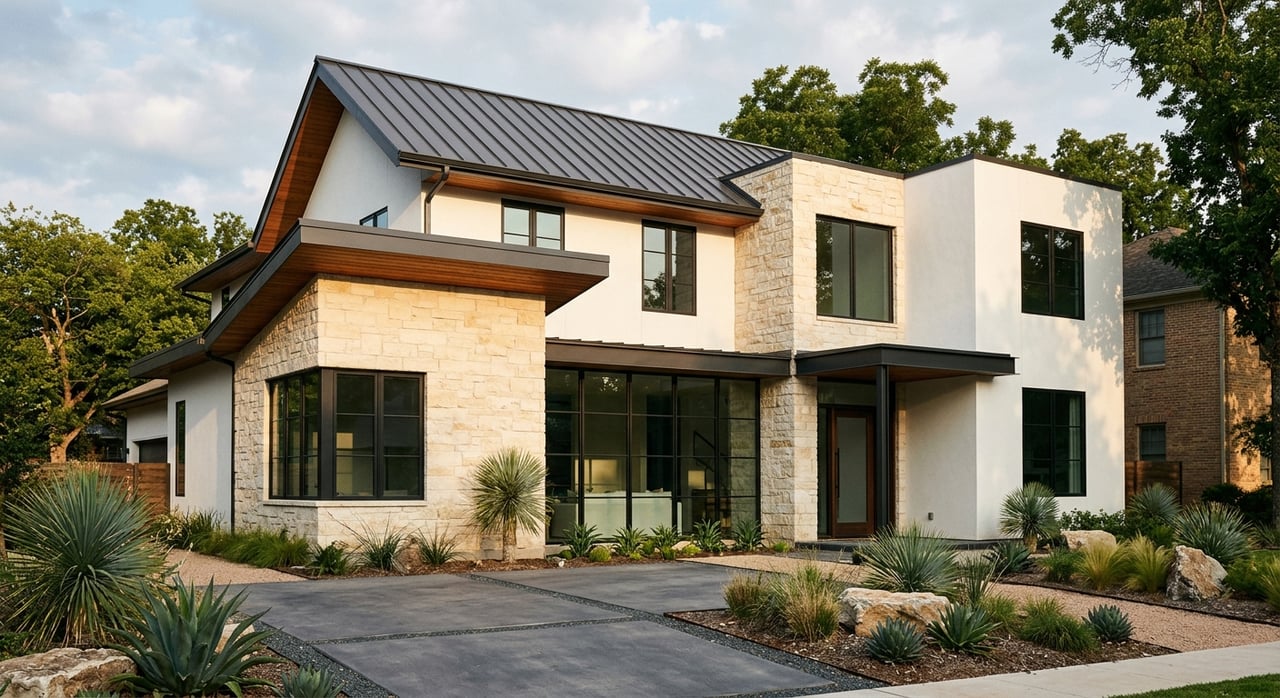
East Austin isn't one market—it's dozens of distinct pockets with different vibes, price ranges, and home types. We break down established neighborhoods versus infill projects, local character, and the hard questions every buyer should ask.
East Austin Isn't One Neighborhood. Here's How to Navigate It.
When people say 'East Austin,' they usually mean everything east of I-35, but that's like saying 'the entire northwest quadrant' and expecting everyone to nod. East Austin spans from Manor Highway south to the Colorado River, and from the interstate east into areas that feel like small towns. Established historic homes sit blocks away from brand-new infill projects. Walk-friendly streets meet car-dependent stretches. Prices, character, and buyer needs are wildly different depending on which pocket you're looking at.
Gavin and I have spent years working with families, investors, and first-time buyers across East Austin. The most successful clients didn't just fall in love with 'the neighborhood.' They got specific about the actual block, the home type, the local businesses they'd use, and the realities of where they were really buying. That's what we're walking through today.
The Main East Austin Pockets and What They Feel Like
East Austin traditionally clusters into a few character-driven zones. Mueller, northeast of downtown, is the largest planned infill community in the area: newer construction, mixed housing types, dedicated parks, and a central gathering space. It's designed from the ground up for walkability and feels intentionally built. Holly, just south, has older established homes with mature trees and a quieter, tree-lined vibe. Elgin and the neighborhoods around it offer a mix of older cottages and newer infill alongside local businesses that have been there for decades. Riverside and neighboring areas near the Colorado River have their own rhythm, with smaller homes, character, and views that attract investors and young families alike.
Then there are the pockets that feel less 'neighborhood' and more like emerging areas: stretches along Airport Boulevard, Manor Road, and Springdale where you'll find existing homes being renovated, new infill going up, and everything in between. These blocks don't have a unified feel yet. That can be an advantage if you like a quiet, less-crowded setting; it can also mean fewer amenities nearby and longer drives to things you use regularly.
Established Homes vs. Infill: What Buyers Actually Need to Know
Established homes in East Austin, especially in Holly, Riverside, and the tree-lined core neighborhoods, come with mature landscapes, character detail, and the feel of a settled community. You're buying into an area where the neighborhood is already defined. But you're also likely buying a home built in the 1960s through 1980s, which means foundation questions, roof age, mechanical systems, and potential deferred maintenance are serious due-diligence items. Soil conditions in East Austin vary, and older homes sometimes sit on clay that can shift. Get a structural engineer involved if the home shows any cracks or settling signs.
Infill projects, especially in Mueller and newer pockets near Riverside and Elgin, offer newer construction, modern systems, warranties, and often designed walkability. But infill is denser, which means smaller lots, shared walls sometimes, and less privacy than traditional single-family neighborhoods. You're also living in an area that's actively changing, with more new projects planned around you. That appeals to some buyers and frustrates others.
Neither is universally better. The question isn't 'established or infill.' It's 'which aligns with how I actually live and what I can afford to maintain.'
The Questions Every East Austin Buyer Should Ask, Block by Block
- What's within a walkable distance? Don't assume your block is walkable just because East Austin has 'walkability' in the marketing. Walk it yourself at the time of day you'd actually use local businesses. Are there sidewalks? Are they continuous? Are there good grocery, coffee, restaurants, parks within a realistic walk, or are you realistically driving?
- What's zoned here, and what could be zoned here? East Austin zoning is complex and actively evolving. A quiet residential block could have mixed-use development approved nearby. Ask your agent for the zoning map and future land-use plan. Don't just assume your view of green space will stay green space.
- How's the lot condition and what are soil issues? Especially for established homes and older infill, get a Phase I environmental report if the property has any industrial history. East Austin has pockets with previous industrial use that can affect soil and require disclosure.
- What's the age and condition of the roof, HVAC, foundation, and plumbing? Don't let 'charming' override a 25-year-old roof on an older home. Get inspections done and factor replacement costs into your offer math.
- Is there HOA, and what are the rules and fees? Some East Austin infill communities have HOAs; older neighborhoods typically don't. Know what you're getting and whether those rules and costs feel like a fit.
- What's the local school catchment, and how's the rating? If schools matter to you, check attendance boundaries and recent performance data. East Austin has good schools and schools with challenges. Know which one you're in.
- Who are my actual neighbors going to be? Investor-heavy blocks feel different than owner-occupied blocks. Walk the block at different times. Talk to people if you can. The vibe matters.
- How stable or active is the commercial corridor nearby? If you're buying near a commercial stretch like Elgin or Springdale, those businesses and properties change. Is it improving, or is turnover high? Does that affect noise, parking, or traffic?
What We See Working Well in East Austin Right Now
Holly and established neighborhoods with mature trees, walkable local businesses, and owner-occupied homes are holding steady and attracting families. Mueller continues to draw young professionals and small families who value new construction and designed walkability. Riverside near the water and along the Colorado River corridor is seeing both renovation and new infill, which appeals to investors and buyers seeking character plus equity upside. Areas around Elgin and Manor Road are active and evolving, which means opportunities for patient buyers who understand the changing landscape.
Your Due Diligence Is Your Leverage
Markets cool and heat. Interest rates and inventory shift. But what doesn't change is that a home is still the biggest purchase most people make. In East Austin, where the diversity of pockets, age of homes, zoning changes, and development activity are all real factors, your homework is your advantage. Ask hard questions. Walk the blocks at different times. Get proper inspections. Talk to people living there. Don't buy a neighborhood story; buy a home in a specific place where you've actually verified what you're getting.
If you're serious about East Austin, we're happy to walk blocks with you, pull comps, talk through the nuances of specific neighborhoods, and help you make a grounded decision. That's what we do, and it's where we live.

Graham Brothers
The Graham Brothers — Austin Real Estate